passive house

The Pratt House project is an example of a burgeoning movement in the building industry. With the growing concern over the environment and energy, builders and architects are devising ways to dramatically cut the energy use in people’s homes, for both new construction and retrofits. In the U.S., all buildings represent about half of greenhouse gas emissions, according to the U.S. Green Building Council.

Via: This Green Home Will Heat Itself

At some point in the future, we’re going to either convert or build a new house that is passively heated and cooled. All of the research I can find so far says that we will need an auxiliary heat source, but that we should be able to achieve a very energy efficient home in minnesota.

being a pedestrian

it is a minnesota state law that you must yield to a pedestrian in a crosswalk, correct?

actually…

Where traffic-control signals are not in place or in operation, the driver of a vehicle shall stop to yield the right-of-way to a pedestrian crossing the roadway within a marked crosswalk or at an intersection with no marked crosswalk. The driver must remain stopped until the pedestrian has passed the lane in which the vehicle is stopped.

nobody seems to obey this law.

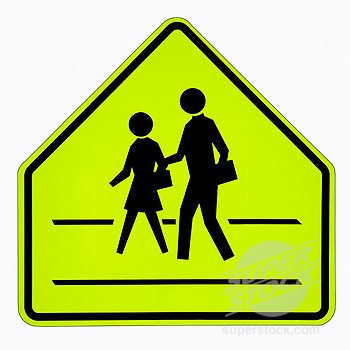
pedestrian crossing.jpgi’ve taken to standing and pointing at the sign, while staring disapprovingly at the cars driving past.

it’s called a parkway for a reason.

slow down.

roundabouts

“Why American drivers should learn to love the roundabout.”

(Via Slate Magazine.)

The narrative the author cites is exactly the same story I heard from someone at a recent community meeting here in Minneapolis. The article cites Golden, CO as an example (which I remember everyone professing to hate).

I love roundabouts, for all the reasons listed… the only thing I don’t like is people who can’t figure them out.

More to the story

“An Amazon spokesman, Drew Herdener, said in an e-mail message that the books were added to the Kindle store by a company that did not have rights to them, using a self-service function. ‘When we were notified of this by the rights holder, we removed the illegal copies from our systems and from customers’ devices, and refunded customers,’ he said.”

(Via Amazon Erases Orwell Books From Kindle.)

Three things:

  1. How hard would it have been for Amazon to email the customers in advance of the deletion? (BTW, I’m a big Amazon fan, but they totally screwed up here)
  2. What do “U.S.” rights and “Australian” rights mean in today’s world? It doesn’t make sense. Movies that are released in one market but not another, books that are released on different dates in different countries, CDs that are released as “imports” with different tracks. Stupid.
  3. How long is copyright anyway? I thought that 1984 was in the public domain? (I know I read it online, perhaps “illegally”)

more on health care

if you’re interested in reading more on the subject, including comparisons to other health systems around the world, here’s a good article…

In his new book The Healing of America, the journalist T.R. Reid employs a clever device for surveying the world’s health systems: He takes an old shoulder injury to doctors in various countries.

Health, American-style

it’s all about choices

Remember back to July of 2001, if you can. Do remember the massive $1.5 trillion dollar tax cut that President Bush signed into law?

Lines up pretty nicely with the $1 trillion dollar health care plan, doesn’t it…

It’s all about choices. More over at TPM — Let the Record Show

The problem of digital content

The problem is… who owns it and what is it worth?

“This morning, hundreds of Amazon Kindle owners awoke to discover that books by a certain famous author had mysteriously disappeared from their e-book readers. These were books that they had bought and paid for—thought they owned.

But no, apparently the publisher changed its mind about offering an electronic edition, and apparently Amazon, whose business lives and dies by publisher happiness, caved. It electronically deleted all books by this author from people’s Kindles and credited their accounts for the price.”

(Via Some E-Books Are More Equal Than Others – Pogue’s Posts Blog – NYTimes.com)

The traditional media industry will be totally remade in the next ten years. Every major creative industry (music, movies and tv, words) is going to have to come to grips with what it is that they are really selling (or what it is that people are really interested in buying.)

In fact, it’s not only the traditional media companies that are being put through the blender, but also all of the pipe providers: comcast, Mark Cuban, Qwest, Verizon, AT&T, etc are going to have to come to grips with what they are really selling: Bits.

What is Amazon selling? Bits.

What are newspapers, magazines, albums, movies, sitcoms and books? Bits.

Does the value of the bits change depending on what they can be decoded in to?

What is the revenue to be made from making 1 more digital copy of something?

What is the incentive for people to create something that can be copied, if they aren’t compensated for every copy?

This is a big swirling topic, but I find it incredibly interesting. I’m confronted with this on a daily basis when it comes to student work, teacher use of copyrighted material, and my own media-consuming habits.

The two (copyrighted) books I purchased:

Free
by Chris Anderson (“In the digital marketplace, the most effective price is no price at all, argues Anderson”) and Remix
by Lawerence Lessig (“He frames the problem as a war between an old read-only culture, in which media megaliths sell copyrighted music and movies to passive consumers, and a dawning digital read-write culture, in which audiovisual products are freely downloaded and manipulated in an explosion of democratized creativity.”)